Customs Inspector Exam Morocco 2026: 26 Government Jobs That Could Shape Your Future

Some opportunities don’t just offer a job they offer a future you can build on.
A stable salary. A clear path. A role that actually matters.
For many young graduates in Morocco, government jobs have always carried that promise. Not because they are easy to get but because they are worth it.
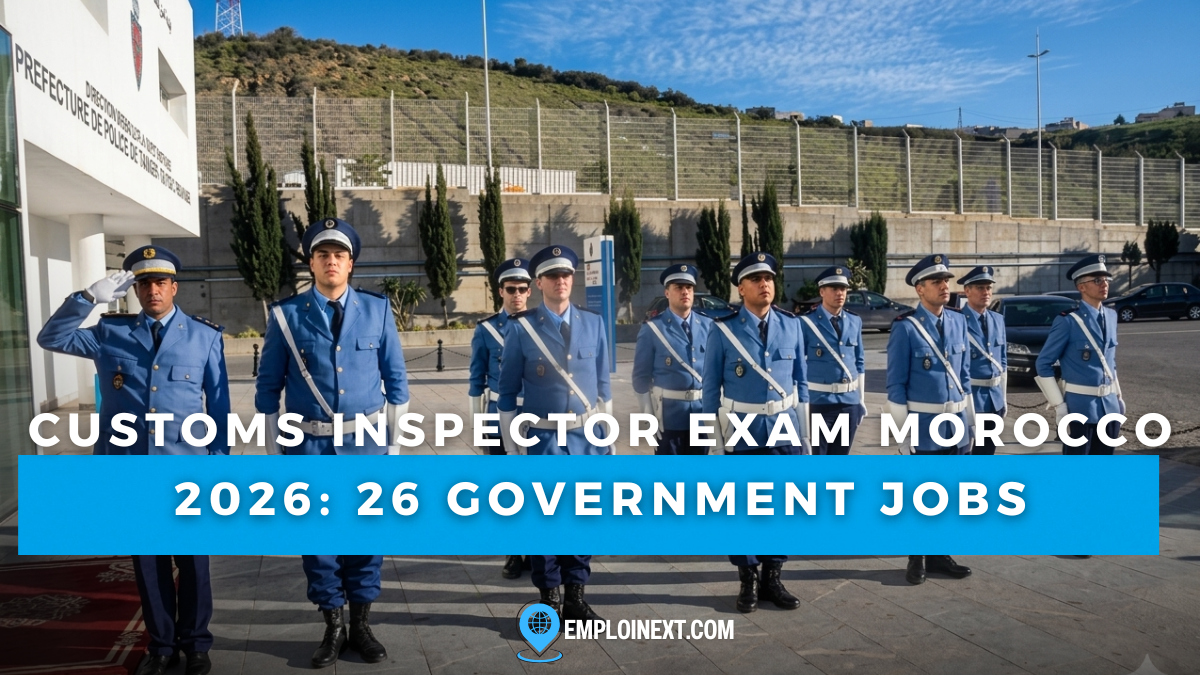
This year, one of the most respected competitions is back: the recruitment of Customs Inspectors (Grade 1). A serious challenge, yes. But also a real chance to step into a role that protects the country’s economy and opens doors to long-term growth.
What the Program Is About
The competition is organized by the Ministry of Economy and Finance Morocco, specifically for the Administration des Douanes et Impôts Indirects.
A total of 26 positions are available for 2026.
This isn’t just another public job. Customs inspectors play a key role in:
- Controlling goods entering and leaving the country
- Fighting smuggling and illegal trade
- Protecting national economic interests
It’s a position that combines responsibility, fieldwork, and analytical thinking.
And that’s what makes it meaningful.
Who Can Apply
This opportunity is designed for young graduates who are ready to take on responsibility.
Here’s a simple breakdown:
- Moroccan nationality is required
- Age between 21 and 30 (up to 35 in special cases)
- A Master’s degree (or equivalent)
- Fields: law, economics, or scientific disciplines
- Good physical and mental fitness
You don’t need years of experience.
But you do need seriousness, discipline, and the ability to handle pressure.
What You’ll Do
Being a customs inspector is not a desk-only job.
It’s a mix of fieldwork, control, and decision-making.
Your responsibilities may include:
- Monitoring goods and transport at borders
- Checking documents and ensuring legal compliance
- Detecting fraud or suspicious activities
- Applying customs and tax regulations
In-Person Experience
This is a fully on-site role, often in dynamic environments like ports, airports, or border zones.
You may work:
- Day and night shifts
- In changing conditions
- Under pressure during inspections
It’s not always comfortable but it’s never boring.
Why It Matters
Let’s be honest.
Some opportunities look attractive but don’t lead anywhere real.
Short-term programs, unclear roles, or experiences that don’t build your future.
This is different.
A customs inspector role offers:
- Long-term career stability
- Real responsibility from the start
- A chance to contribute to national security and economy
You’re not just working for yourself.
You’re part of something bigger.
Practical Tips for Applicants
If you’re thinking about applying, preparation is everything.
Here’s what actually helps:
1. Take the written exam seriously
Review your field. Practice multiple-choice questions (QCM). Stay updated on economic and legal topics.
2. Train physically early
The 1500m run is not something to prepare at the last minute. Start now, even with short runs.
3. Prepare for the interview
You’ll be evaluated on how you speak, think, and present yourself.
Practice simple things like introducing yourself clearly.
4. Understand the role deeply
Learn about customs missions. It shows motivation and maturity.
5. Respect deadlines and documents
Applications must be submitted online via the official portal.
The Ethical Side
Public sector competitions in Morocco follow a structured and transparent system.
This one is no exception.
- Clear requirements
- Defined selection (written, physical, oral)
- Official announcements for results
It’s competitive, yes.
With only 26 positions, not everyone will succeed.
But the process itself is fair and that matters.
No shortcuts. Just merit.
Frequently Asked Questions
1. When is the exam scheduled?
The written exam is planned for May 17, 2026.
2. What is the last date to apply?
Applications close on May 1, 2026, at 16:30.
3. Where will the exam take place?
In Rabat.
4. Is experience required?
No, but strong academic preparation is important.
5. How do I apply?
Through the official online portal of the Ministry of Economy and Finance.
Conclusion
There’s something different about opportunities that require effort.
They don’t come easy. They don’t promise quick success.
But they build something solid.